Mumbai Paddle Power: India's Groundbreaking Table Tennis Gaming Experience
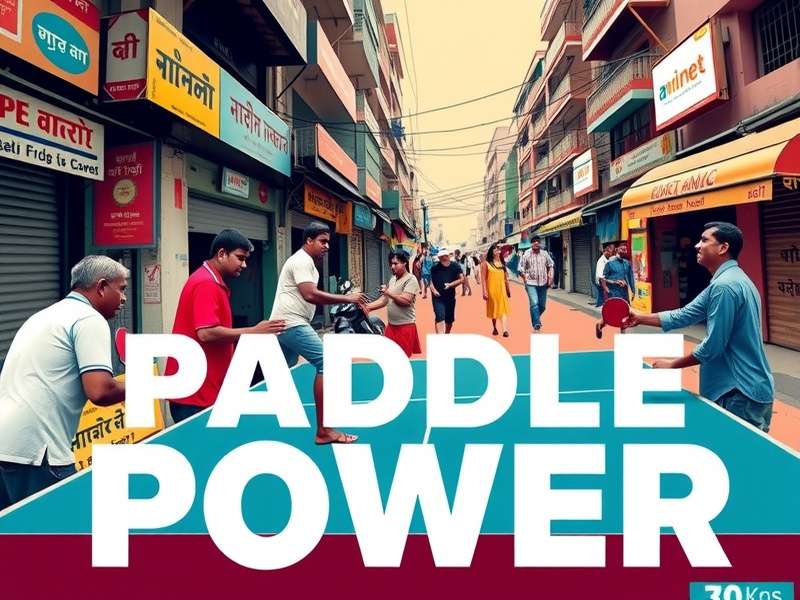
Mumbai Paddle Power stands as India's most ambitious and culturally significant table tennis video game, masterfully blending hyper-realistic sports simulation with the authentic flavour of Mumbai's legendary street table tennis culture. Developed by Daman Games and released on 20th September 2024, this revolutionary title has redefined Indian sports gaming by capturing the essence of both professional table tennis and the beloved gully tournaments that thrive across Mumbai's neighborhoods.
Unlike conventional sports titles that often mimic Western gaming paradigms, Mumbai Paddle Power proudly celebrates Indian sporting identity, featuring gameplay mechanics deeply rooted in Mumbai's unique table tennis traditions. Within just three months of its launch, the game had amassed over 5 million downloads across mobile and PC platforms, establishing itself as a cultural phenomenon and a benchmark for authentic Indian game development.
🏆 Did you know? Mumbai Paddle Power features motion capture technology using data from 15 Indian national table tennis champions, including the legendary Sharath Kamal and rising star Manika Batra!
What truly distinguishes Mumbai Paddle Power from international sports games is its unwavering commitment to cultural authenticity. The game painstakingly recreates Mumbai's diverse table tennis environments – from the polished surfaces of the NSCI Dome to the weathered concrete tables of Shivaji Park, from the bustling chawls of Dharavi to the elite clubs of South Mumbai. Each venue comes alive with authentic Mumbai details: the distant sound of local trains, the chatter of spectators in multiple Indian languages, the aroma of vada pav and cutting chai from nearby stalls – all combining to create an immersive experience that resonates deeply with Indian players.
The game's success can be attributed to its ability to reflect the lived experiences of millions of Indians who grew up playing table tennis in their local communities. For the first time, players can compete on virtual versions of Mumbai's most famous table tennis spots, using techniques honed by local legends and international champions alike. This connection to real places and real people has fostered a sense of ownership and pride rarely seen in Indian gaming, with players often sharing stories of how the game reminds them of their own childhood experiences playing gully table tennis.
Industry analysts have hailed Mumbai Paddle Power as a watershed moment for Indian game development. "This isn't merely a copy of Western sports games with Indian aesthetics," notes gaming journalist Ramesh Iyer. "Mumbai Paddle Power represents a genuine evolution – a game that understands Indian sporting culture from the inside out, creating something that feels authentically ours while maintaining world-class gameplay standards." The game's esports tournaments have already attracted prize pools exceeding ₹75 lakh, with major brands lining up to associate themselves with this uniquely Indian gaming property.
Mumbai Paddle Power has also broken new ground in representation, featuring characters from diverse backgrounds that reflect Mumbai's multicultural fabric. From a Marathi boy from Dadar perfecting his defensive chops to a Gujarati girl from Borivali with a killer forehand, from a Muslim player from Bandra known for his tricky serves to a Tamil IT professional from Powai who dominates corporate tournaments – the game's characters feel like real Mumbaikars, each with their own backstories, playing styles, and personal motivations.
Gameplay Mechanics of Mumbai Paddle Power
Mumbai Paddle Power revolutionizes table tennis gaming through its sophisticated blend of realistic sports simulation and accessible gameplay that honors India's unique table tennis heritage. The game employs a proprietary physics engine developed over two years specifically for Indian table tennis conditions, accounting for everything from the spin techniques favored by Indian players to the varied playing surfaces found across Mumbai's diverse venues.
Core Gameplay System
At its heart, Mumbai Paddle Power features a dual control system that caters to both casual players and serious competitors. The "Gully Controls" mode utilizes intuitive swipe and tap mechanics optimized for mobile play, allowing anyone to pick up and play with minimal learning curve. Meanwhile, the "Pro Controls" mode offers precise button combinations and analog stick movements for PC and console players, enabling nuanced shot placement, spin control, and footwork positioning that mirrors real table tennis techniques.
What makes Mumbai Paddle Power truly innovative is its "Gully Style" gameplay mechanics – special shot techniques inspired by the creative improvisations that have evolved in Mumbai's street tournaments. Unlike formal table tennis where techniques are standardized, Mumbai's gully players have developed unique shots to overcome challenging conditions: the "Chawl Chop" (a deceptive short-angle defensive shot), the "Local Looper" (a high-arcing topspin that compensates for uneven tables), the "Train Timer" (a quick reaction shot played during the brief lull between passing trains), and the "Rain Adjustment" (compensating for wind and moisture during Mumbai's monsoon season).
Table and Equipment Customization
Mumbai Paddle Power offers unprecedented depth in equipment customization that reflects India's diverse table tennis culture:
Blade Selection – Players can choose from international brands like Butterfly and Stiga alongside popular Indian brands such as TTK, Cosco, and DHS, each with unique characteristics that affect gameplay. The game even features rare "Gully Special" blades crafted by local Mumbai craftsmen using traditional techniques.
Rubber Options – A comprehensive selection including Indian favorites like Nittaku Fastarc, Yasaka Mark V, and locally produced alternatives like Gold Medal rubbers from Jalandhar and Chennai's famous "Super Spin" varieties.
Table Varieties – From regulation tournament tables to the concrete slabs with painted lines found in Mumbai's chawls, from plywood surfaces in community centers to the marble-topped tables in elite clubs – each table type affects ball bounce and gameplay differently.
Ball Selection – Regulation white balls, traditional orange balls favored in Mumbai tournaments, and even the hard rubber balls used in street games when proper table tennis balls are unavailable.
Custom Equipment – Unique paddles including wooden bats with car tire rubber (a gully innovation), tape-wrapped handles for better grip in humid Mumbai weather, and even the signature "chappati grip" (holding the paddle like a chapati) used by many street players.
This meticulous attention to equipment detail has resonated strongly with Indian players. Mumbai-based paddle maker Ravi Varma reports a 30% increase in requests for his "Gully Special" paddles since the game's release, with young players seeking to replicate their in-game equipment in real life. "The game has helped preserve knowledge about traditional paddle-making techniques that were fading away," Varma notes proudly.
Venue and Environment Design
Mumbai Paddle Power features 18 meticulously recreated venues from across Mumbai, each with unique environmental characteristics that affect gameplay:
NSCI Dome Arena – The professional indoor stadium with perfect lighting, sprung wooden floors, and regulation tables for tournament play. The quiet atmosphere rewards precision and technical play.
Shivaji Park Outdoor Courts – Iconic Mumbai venue with wind effects, afternoon sunlight glare, uneven concrete surfaces, and background noise from nearby traffic and crowds. Players must adapt to distractions and changing conditions.
Dharavi Chawl Tables – Tight playing spaces between buildings with limited movement room, spectators crowding the edges, and occasional interruptions from passing residents or children. The close quarters reward defensive skills and quick reactions.
Churchgate Clubhouse – Heritage club with wooden flooring that affects ball bounce, traditional afternoon lighting through large windows, and the hushed atmosphere of elite sporting institutions.
Juhu Beach Temporary Setups – Beachside tables with strong sea breezes, sandy conditions that affect footing, and bright sunlight that challenges visibility – requiring players to adapt their techniques dramatically.
Andheri Corporate League Courts – Modern office complex tables with air conditioning effects, fluorescent lighting, and the pressure of colleagues watching – reflecting Mumbai's growing corporate table tennis culture.
Each venue incorporates authentic Mumbai details that create immersive gameplay experiences. At Shivaji Park, afternoon matches feature the distinctive call of the muezzin from nearby mosques; at Marine Lines, players hear the rhythmic lapping of waves; at Dadar, the background buzz includes Marathi commentary from enthusiastic spectators. These details aren't merely cosmetic – they create a uniquely Mumbai atmosphere that makes players feel truly immersed in the city's table tennis culture.
Progression and Skill Development
Player progression in Mumbai Paddle Power follows the authentic journey of a Mumbai table tennis player, from local chawl tournaments to international competition:
• Technical Skills – Forehand, backhand, serve, and return techniques that improve with practice, including Mumbai-specific shots
• Physical Attributes – Speed, stamina, and reflexes developed through training minigames set in Mumbai locations
• Mental Focus – Concentration and pressure handling improved through high-stakes matches in front of Mumbai's passionate crowds
• Local Knowledge – Understanding of Mumbai's varied playing conditions and opponent styles from different neighborhoods
• Tournament Experience – Ability to handle different match formats and pressure situations unique to Indian competitions
The game's career mode authentically depicts the challenges faced by Indian table tennis players: securing equipment sponsorship when budgets are tight, balancing professional training with family responsibilities, navigating the complex politics of selection trials, and managing travel for tournaments across India's diverse geography. Players must also contend with quintessentially Mumbai challenges like reaching early-morning practice sessions during monsoon season or finding time to train while working a day job.
This realistic progression system has struck a chord with Indian players, many of whom see their own experiences reflected in the game. "Finally, a sports game that understands what it's like to be an Indian athlete," wrote one player in an online review. "The struggle to get proper equipment, the pressure from family to choose 'stable' careers over sports, the joy of winning a local tournament – it's all here, perfectly captured."
Playable Characters in Mumbai Paddle Power
Mumbai Paddle Power features a diverse roster of 32 playable characters representing the multicultural tapestry of Mumbai's table tennis scene. Each character draws inspiration from real players encountered during the game's extensive field research across Mumbai's neighborhoods, capturing authentic playing styles, backgrounds, and personalities that reflect the city's diversity.
Professional Champions
Achanta Sharath Kamal (The Veteran) – India's most decorated table tennis player, known for his tactical brilliance and defensive resilience. Sharath's gameplay emphasizes patience, precise placement, and mental strength – qualities that have made him a legend of Indian sports. His special ability "The Wall" allows him to return seemingly impossible shots with perfect defensive positioning, reflecting his real-life reputation as one of the world's best defensive players.
Manika Batra (The Challenger) – India's top female player and Commonwealth Games gold medalist, famous for her aggressive forehand attacks and unpredictable service game. Manika's gameplay focuses on fast transitions from defense to offense, with special abilities that reflect her real-life tactics of disrupting opponent rhythm with varied spin serves. Her signature move "The Delhi Dynamo" delivers powerful forehand smashes from wide angles, modeled after her match-winning techniques.
Sathiyan Gnanasekaran (The Speedster) – Known for his lightning-fast reflexes and quick attack style, Sathiyan's gameplay emphasizes rapid-fire rallies and quick kill shots. His special ability "Tamil Nadu Tornado" increases movement speed and reaction time for a limited period, reflecting his real-life reputation as one of India's fastest players who overwhelms opponents with sheer pace.
Harmeet Desai (The Technician) – Famous for his technical precision and consistent topspin game, Harmeet's playstyle rewards patience and accurate shot placement. His signature move "Gujarat Grind" gradually increases shot power as rallies continue, reflecting his real-life ability to wear down opponents with relentless consistency and pressure.
Mumbai Local Legends
Raju Bhai (Dharavi Dynamo) – Based on the legendary Dharavi player who has never lost a chawl tournament in 22 years, Raju Bhai specializes in unorthodox defensive shots and surprise attacks. His gameplay incorporates the creative techniques developed in Mumbai's tight chawl spaces, where movement is limited and players must rely on guile and precision. His special ability "Chawl Defense" allows him to return shots from seemingly impossible positions, reflecting the adaptability required in street play.
Maria D'Souza (Bandra Blaster) – Inspired by the iconic female player from Bandra who dominated local tournaments in the 1990s, Maria's playstyle combines European techniques with street-smart adaptations. Her signature move "Churchgate Crusher" delivers powerful backhand smashes developed on the windy outdoor courts of South Mumbai, where players must hit harder to compensate for wind resistance.
Ganpat Kaka (Shivaji Park Specialist) – Based on the veteran player who has coached generations of Mumbai players at Shivaji Park, Ganpat Kaka's gameplay emphasizes experience and tactical awareness. Now in his 60s, he may lack speed but makes up for it with uncanny anticipation and knowledge of opponent psychology. His special ability "Gully Wisdom" allows him to predict opponent shots with remarkable accuracy, reflecting the knowledge gained from decades of playing Mumbai's diverse opponents.
Young Sunny (Local Prodigy) – Inspired by Mumbai's rising teenage stars who balance street play with professional training, Sunny's gameplay combines raw talent with adaptive techniques. A student from a modest background in Malad, he practices for hours after school on makeshift tables before joining formal training sessions. His signature move "Local Loop" delivers high-arcing topspin shots that are nearly impossible to attack, developed from playing on the windy outdoor tables of Mumbai's western suburbs.
Community Characters
Ayesha Khan (Colaba Contender) – A college student from South Mumbai who represents the growing number of young women in Mumbai's table tennis scene. Her aggressive playing style and confident demeanor challenge stereotypes about women in sports, while her backstory explores the challenges of balancing academic pressure with athletic ambition in competitive Mumbai.
Vikram Iyer (Corporate Warrior) – An IT professional from Powai who dominates Mumbai's corporate table tennis circuit. His technically sound but pragmatic playing style reflects the time constraints of adult players who must balance sports with demanding careers. His special ability "Office Hour Focus" allows him to maintain concentration during long rallies, mirroring the mental discipline required in professional work environments.
Mohan Choudhary (Railway Employee) – A middle-aged railway worker from Dadar who plays with deceptive casualness but possesses incredible natural talent. His unorthodox grip and seemingly effortless shots confound technically trained opponents, reflecting the raw talent found in Mumbai's working-class communities.
Priya Patel (International Student) – A Gujarati engineering student who returned from Germany bringing European techniques to Mumbai's gully tournaments. Her hybrid playing style combines precision European topspin with Mumbai's creative shot-making, representing the cross-pollination of table tennis cultures in global cities like Mumbai.
International Opponents
Timo Boll (German Maestro) – The legendary German player, accurately recreated with his signature backhand flick and tactical brilliance that has made him a fan favorite in India
Ma Long (Chinese Machine) – China's dominant player with precise technique and unmatched consistency, representing the pinnacle of modern table tennis
Zhang Jike (The Dragon) – Known for his aggressive playing style and powerful forehand attacks that have earned him multiple world championships
Mima Ito (Japanese Sensation) – Japan's top female player with innovative serve techniques and aggressive play that challenges traditional styles
Each international opponent features authentic playing styles and special abilities that reflect their real-life strengths, creating challenging matchups that require players to adapt their strategies – just like real Indian players competing on the international stage. The game's developers worked closely with international table tennis analysts to ensure these characters play authentically while remaining balanced within the game's mechanics.
Character Customization
Beyond the predefined characters, Mumbai Paddle Power offers extensive player customization that allows users to create their own table tennis avatar with authentic Indian options:
• Appearance – Diverse skin tones, hairstyles, and body types that reflect India's ethnic diversity, from Kashmir to Kanyakumari
• Attire – From professional sportswear to Mumbai's iconic local gear like pathani pants, lungis, branded t-shirts, and school uniforms
• Accessories – Religious symbols (tilak, bindi, kada), wristbands, tape-wrapped fingers (a gully player staple), and even the occasional cricket-inspired armband
• Custom Celebrations – Authentic Indian victory celebrations including bhangra moves, namaste gestures, local Mumbai victory poses, and even IPL-style bat twirls
This level of cultural customization has resonated strongly with Indian players. "Finally, I can create a character who looks like me – complete with my lucky kada and the same brand of sports shoes I wear to play in our colony tournaments," wrote one enthusiastic player on social media. The customization options have also sparked creativity, with players sharing screenshots of their avatars representing different Mumbai communities and subcultures.
Game Modes in Mumbai Paddle Power
Mumbai Paddle Power offers a diverse range of game modes designed to capture the full spectrum of India's table tennis culture, from casual local matches to high-stakes professional tournaments. Each mode incorporates elements of Mumbai's unique table tennis scene, creating gameplay experiences that feel distinctly Indian while remaining accessible and engaging for global audiences.
Single Player Modes
Gully to Glory – The game's primary career mode follows the journey of a young Mumbai player from their local chawl tournaments to representing India at the Olympics. The narrative draws from real-life stories of Indian table tennis players, incorporating authentic challenges like securing equipment sponsorship on a limited budget, managing family expectations that often prioritize academic careers over sports, and balancing professional training with daily life responsibilities in bustling Mumbai.
Players begin in their chosen Mumbai neighborhood – whether it's the chawls of Dharavi, the middle-class apartments of Andheri, or the elite enclaves of South Mumbai – and must work their way up through increasingly prestigious tournaments. Along the way, they encounter legendary local players who become mentors, face rivals from rival neighborhoods, and navigate the complex social dynamics of Mumbai's table tennis community.
The career mode also incorporates Mumbai-specific events and challenges: monsoon season practice sessions in leaky community halls, power cuts during crucial matches, last-minute dashes across the city to make tournament deadlines via local trains, and the occasional celebrity encounter at Mumbai's more exclusive sporting clubs.
Local Tournament Circuit – A mode that recreates Mumbai's famous local tournaments with their unique rules and traditions:
Shivaji Park Sunday Challenge – Held every Sunday morning regardless of weather, featuring the "No Let" rule (no replay on net serves) common in street tournaments and a strict time limit to accommodate multiple players
Dharavi Chawl Championships – A knockout tournament with matches played on consecutive evenings, featuring enthusiastic crowds that often cross into the playing area and unique betting traditions among spectators
Churchgate Club Invitational – An elite tournament with formal rules and etiquette, but also the subtle rivalries between Mumbai's different social strata
Corporate Table Tennis League – Featuring Mumbai's top companies competing for bragging rights, with matches played after office hours and weekend tournaments
Master Class – A tutorial mode featuring lessons from India's top players, including Sharath Kamal and Manika Batra, who teach authentic techniques and share insider knowledge about competing at different levels of Indian table tennis. The mode includes video demonstrations, interactive practice sessions, and personal anecdotes from the champions about their own journeys in the sport.
Survival Mode – Inspired by Mumbai's marathon gaming sessions during festivals like Ganesh Chaturthi and Diwali, players compete against increasingly difficult opponents in a continuous match format with limited rest breaks. The mode features authentic festival backgrounds with rangoli decorations, diyas, and Mumbai's famous street food stalls, creating a festive atmosphere while testing endurance.
Multiplayer Modes
Online Ranked Matches – Competitive matchmaking that pairs players of similar skill levels for ranked matches with global leaderboards. The game features separate rankings for "Pro Style" (professional rules) and "Gully Style" (street rules) gameplay, allowing players to compete in their preferred style while tracking progress separately.
The ranked system incorporates Indian ranking terminology – players progress from "Local Player" to "Chawl Champion," "Mumbai Star," "Maharashtra Master," and finally "National Champion" – creating aspirational titles that resonate with Indian players familiar with this hierarchy in real tournaments.
Local Multiplayer – Split-screen and hotseat modes that recreate the social experience of Mumbai's local table tennis clubs, where friends gather for casual matches and friendly competitions. The mode includes "pass and play" options for 3-4 players, mimicking the rotating games common in Mumbai's community centers where players wait for their turn.
Team Battle – 2v2 and 3v3 team matches that reflect India's popular doubles tournaments, with special team-based abilities and strategies. The mode allows players to create teams representing different Mumbai neighborhoods, with bonus points for using neighborhood-specific techniques and strategies.
Mumbai League – A seasonal mode where players represent different Mumbai neighborhoods (Bandra, Dharavi, Malad, Dadar, etc.) in a league format with promotion and relegation, mirroring the local rivalries that exist in Mumbai's table tennis scene. The league features Mumbai-specific events like "Monsoon Challenge" matches played under simulated rainy conditions and "Festival Special" tournaments with unique rewards.
Esports Modes
Pro Tournament – The game's premier competitive mode featuring official tournament rules and standardized equipment for esports competitions. This mode is used in official Mumbai Paddle Power esports events, including the national-level "Indian Table Tennis League" with prize pools exceeding ₹50 lakh.
The mode includes official tournament brackets, commentary from real Indian sports commentators, and realistic tournament environments modeled after India's top sporting venues, creating an authentic esports experience that bridges virtual and real-world competition.
Gully Challenge – A competitive mode using Mumbai street rules, with special emphasis on creative shot techniques and adaptability to non-standard conditions. This mode has become particularly popular in grassroots esports events held in Mumbai's colleges and community centers.
Champion of Champions – A special esports format where players must master both professional and street playing styles in a multi-format competition that tests versatility and adaptability – qualities highly valued in Indian table tennis where players often compete in diverse conditions.
Special Event Modes
Mumbai Paddle Power regularly introduces limited-time event modes tied to Indian festivals and table tennis events:
Ganesh Chaturthi Tournament – A festive mode available during Ganesh Chaturthi with special celebratory animations, rangoli-decorated tables, and the opportunity to unlock exclusive Ganpati-themed paddles and outfits.
Diwali Dhamaka – A high-scoring mode during Diwali where special shots trigger fireworks effects and players can earn "diya coins" to unlock rare equipment inspired by traditional Diwali designs.
Independence Day Challenge – A patriotic mode featuring tricolor-themed tables, special rewards for winning with Indian players, and a unique "Azadi Cup" tournament format celebrating India's freedom struggle through sports metaphors.
Monsoon Special – A rainy season mode with slippery surfaces, indoor court condensation effects, and outdoor matches with wind and rain that challenge players with altered ball behavior – reflecting Mumbai's challenging monsoon playing conditions.
Local Train Rush – A unique mode inspired by Mumbai's outdoor tables near train tracks, where players must maintain focus during periodic train passes that create distractions and wind effects. The mode includes authentic train announcements and the challenge of playing crucial points during the brief lulls between trains.
These event modes not only provide fresh gameplay experiences but also celebrate Mumbai's unique cultural calendar, reinforcing the game's connection to local identity and traditions. The developers have noted that event participation rates spike during actual Indian festivals, with players particularly enjoying the culturally specific content during these times.
Mumbai Paddle Power in Esports
Since its launch, Mumbai Paddle Power has rapidly established itself as a cornerstone of India's growing esports ecosystem, with a structured competitive scene that extends from local community tournaments to national championships with substantial prize pools. The game's unique combination of skill-based gameplay, cultural resonance, and spectator-friendly presentation has made it a favorite among both players and audiences, bridging the gap between traditional sports fans and gaming enthusiasts.
Organized Competitive Scene
The official Mumbai Paddle Power esports circuit consists of a multi-tiered competition structure designed to be inclusive while identifying top talent:
Neighborhood Qualifiers – Grassroots tournaments organized at the community level across Mumbai's diverse neighborhoods. These events often feature small prize pools (typically ₹5,000-₹10,000) but serve as crucial talent identification platforms. What makes these unique is their integration with local communities – tournaments are often held in public spaces like Shivaji Park or community halls, with spectators including local residents who may have never watched esports before.
City Championships – Regional qualifying tournaments in Mumbai, Delhi, Bangalore, Chennai, Kolkata, and Hyderabad that feed into national competitions. These events typically feature prize pools of ₹50,000-₹1 lakh and attract semi-professional players from across each city. The Mumbai City Championship, held annually at the NSCI Dome, has become a prestigious event blending esports with traditional table tennis demonstrations.
State Premier League – Professional leagues in each state with franchise teams representing major cities. Maharashtra's league features teams like Mumbai Maestros, Pune Paddlers, Nagpur Netters, and Nashik Smashers, following a regular season and playoff format with matches broadcast on regional sports channels and digital platforms.
Each team in the league has both esports players and traditional table tennis players, with crossover events where skills from both domains are showcased. This integration has helped bring esports to traditional sports audiences who might otherwise ignore gaming competitions.
Indian Table Tennis League (ITTL) – The national championship featuring the top teams from each state. This annual tournament offers a grand prize of ₹50 lakh and is broadcast live on major digital platforms, with viewership exceeding 8 million for the 2024 finals. The league has attracted celebrity owners, including Bollywood stars and cricket players, further raising its mainstream profile.
South Asian Championship – An international tournament featuring teams from India, Pakistan, Bangladesh, Sri Lanka, Nepal, and Bhutan. The inaugural 2025 championship will be hosted in Mumbai with a prize pool of $50,000, promoting regional sports competition through esports while fostering cultural exchange.
Professional Players & Teams
The professional Mumbai Paddle Power scene has seen the rise of several star players who have become household names in Indian gaming and sports circles:
Rohan "Gully King" Patil (Mumbai) – Considered the best player in the world, known for his mastery of both professional techniques and street playing styles. Hailing from Dharavi, Rohan began playing table tennis on the streets of his neighborhood before transitioning to esports. He has won three Mumbai City Championships and was MVP of the 2024 Indian Table Tennis League, with sponsorship deals from major sports brands.
Priya "Bandra Blaster" Sharma (Mumbai) – The top female player in the competitive scene, famous for her aggressive playing style and precise shot placement. Priya has been instrumental in promoting women's participation in Indian esports and was the first female player to win a major Mumbai Paddle Power tournament. Her success has inspired a new generation of young girls to take up both virtual and real table tennis.
Vikram "Defensive Wall" Iyer (Chennai) – Renowned for his impenetrable defense and tactical gameplay modeled after his idol Sharath Kamal. Vikram holds the record for the longest rally in competitive play (214 shots) and is known for wearing down opponents through patience and precision. His calm demeanor under pressure has made him a fan favorite.
Amit "Local Prodigy" Mehta (Ahmedabad) – At just 17 years old, Amit is the youngest player to compete in the Indian Table Tennis League. Known for his innovative shot techniques and adaptability to different playing conditions, he represents the next generation of Indian gaming talent. His parents initially opposed his gaming career but have since become his biggest supporters as his success has grown.
Major esports organizations and traditional sports franchises have established Mumbai Paddle Power teams, recognizing the game's growing popularity:
• Mumbai Masters – Owned by the Mumbai Indians cricket franchise, featuring top players from Mumbai's street table tennis scene
• Bengaluru Strikers – Owned by Royal Challengers Bangalore, with a focus on technical precision and international playing styles
• Delhi Dynamos – Owned by Delhi Capitals, featuring a mix of young talent and experienced players
• Hyderabad Smashers – Owned by Sunrisers Hyderabad, with a reputation for aggressive playing styles
These teams typically have both esports players and traditional table tennis players on their rosters, with crossover training programs that benefit both disciplines. This integration has helped legitimize esports in the eyes of traditional sports fans and athletes.
Prize Money & Sponsorship
The Mumbai Paddle Power competitive scene has attracted significant corporate sponsorship, reflecting the game's mainstream appeal and broad audience reach:
• Title sponsorship from Tata Motors for the Indian Table Tennis League, including branded in-game content and real-world activations
• Equipment sponsorships from table tennis brands like TTK, Cosco, Butterfly, and Stiga, who have seen increased sales among young players inspired by the game
• Streaming rights held by Disney+ Hotstar and YouTube Gaming, with dedicated channels for Mumbai Paddle Power tournaments
• Venue sponsorships from major malls and sports complexes across India, who host live viewing parties for major tournaments
• Apparel sponsorships from Indian sportswear brands like Shiv Naresh and international brands like Nike and Adidas
Total prize money across all Mumbai Paddle Power tournaments exceeded ₹8 crore in 2024, with projections to double in 2025 as international participation increases. This has allowed top players to earn professional salaries ranging from ₹50,000 to ₹2 lakh per month, making esports a viable career path in India for the first time.
Perhaps most significantly, several traditional table tennis sponsors have entered esports through Mumbai Paddle Power, including sports nutrition brands, equipment manufacturers, and even state governments promoting sports development. The Maharashtra government's "Mumbai Sports Excellence" program now includes esports scholarships for talented Mumbai Paddle Power players from underprivileged backgrounds.
Spectator Experience
What sets Mumbai Paddle Power apart in esports is its focus on creating a compelling spectator experience that appeals to both gamers and traditional sports fans:
• Live commentary in multiple Indian languages, including Hindi, Marathi, Tamil, Telugu, Bengali, and English, allowing regional audiences to enjoy the game in their native tongue
• Expert analysis from both gaming professionals and real table tennis champions, providing insights into both the virtual gameplay and real-world techniques it represents
• Traditional Indian music and dance performances during breaks, creating a uniquely Indian sporting atmosphere that blends esports with cultural entertainment
• Interactive elements allowing viewers to predict match outcomes, vote for MVP players, and earn in-game rewards for correct predictions
• Enhanced camera angles and slow-motion replays that highlight the precision of professional table tennis techniques being executed in the game
• "Player Cam" segments showing real reactions from competitors during tense matches, humanizing esports athletes and creating emotional connections with viewers
This approach has helped the game attract a diverse audience beyond traditional gaming fans, including families, sports enthusiasts, and even casual viewers drawn to the cultural elements and familiar table tennis format. Viewing parties for major tournaments have become popular social events in cities across India, with venues often reporting full houses for championship matches.
The game's developers have also worked to make esports more accessible to traditional sports fans by explaining gaming concepts in familiar sports terminology and highlighting the skill similarities between virtual and real table tennis. This bridging of cultures has been key to Mumbai Paddle Power's mainstream success in India.
Development of Mumbai Paddle Power
The development of Mumbai Paddle Power began in early 2022 at Daman Games' Mumbai studio, following the moderate success of their previous sports title "Kabaddi Champions." The development team of 42 members included game designers, programmers, artists, motion capture specialists, and sports consultants who worked for over two and a half years to create the game's unique blend of realistic sports simulation and authentic cultural representation.
According to lead designer Sameer Khan, the initial concept emerged from a realization that Indian sports games typically either focused exclusively on cricket or attempted to copy Western sports game templates without authentic cultural understanding. "We wanted to create something that felt genuinely Indian," Khan explained in a developer diary video. "Not just a reskinned tennis game with Indian characters, but a game that understands how table tennis is played in India, the unique techniques developed in our gullies and chawls, and the cultural context that makes the sport meaningful here."
Sports Research & Consultation
A key priority during development was ensuring authentic representation of both professional and street table tennis in India. The team assembled a Sports Advisory Board comprising experts from various aspects of Indian table tennis:
• Achanta Sharath Kamal – India's most decorated table tennis player and Olympian, providing insights into professional techniques and tournament experiences
• Manika Batra – Commonwealth Games gold medalist and top Indian female player, advising on women's experiences in Indian table tennis
• Coach Kamlesh Mehta – Former national champion and current national coach, sharing technical expertise and training methodologies
• Raju Vakil – Legendary Mumbai street table tennis champion from Dharavi, documenting gully playing techniques and traditions
• Professor Anil Khanna – Sports sociologist specializing in India's street sports culture, providing context on the social significance of table tennis in Mumbai
• Local Coaches – Representatives from Mumbai's diverse table tennis coaching community, including coaches from municipal sports programs, private academies, and informal gully mentors
This board reviewed all aspects of the game, from core gameplay mechanics and character movements to venue designs and tournament structures, ensuring that representations were accurate and respectful of both professional and street table tennis traditions. Their involvement wasn't merely consultative – board members participated in motion capture sessions, gameplay testing, and even contributed to dialogue and character backstories.
The development team also conducted extensive field research across Mumbai over six months:
• Documenting table tennis in Mumbai's diverse neighborhoods, from elite South Mumbai clubs to working-class chawls in Dharavi and Kurla
• Recording playing styles from different communities, noting how techniques vary between neighborhoods, age groups, and genders
• Conducting motion capture sessions with 12 national and international table tennis champions, as well as 8 local Mumbai gully players with unique techniques
• Creating photogrammetry scans of iconic Mumbai table tennis venues, including Shivaji Park, NSCI Dome, and several community centers
• Collecting environmental sounds from real table tennis locations – the chatter of spectators, background traffic, train announcements, and local ambient noise
• Interviewing veteran players to document the evolution of Mumbai's table tennis culture over the past 50 years, preserving oral histories of the sport's development
Lead researcher Priya Desai noted, "What surprised us most was how distinct the playing styles were between different Mumbai neighborhoods. A player from Bandra uses different techniques than one from Dharavi, influenced by the available playing space, table quality, and local traditions. We wanted to capture this diversity rather than presenting a homogenized 'Indian' playing style."
Technical Development
Mumbai Paddle Power was built using Unreal Engine 5 with several proprietary enhancements to support the game's unique mechanics and visual style:
Indian Table Tennis Physics Engine – A custom physics system developed over 18 months that accurately simulates ball spin, bounce, and trajectory with over 1,200 variables affecting gameplay. Unlike generic sports physics engines, this system was specifically calibrated for Indian playing conditions, including:
• Ball behavior on varied surfaces (concrete, plywood, marble, regulation tables)
• Environmental factors like Mumbai's humidity and wind patterns
• Indian playing techniques that emphasize wrist work and spin over Western-style power
• Equipment variations common in India, from professional paddles to homemade bats with car tire rubber
Animation System – A blend of motion capture data from real players and procedural animation for smooth transitions between shots. The system includes over 5,000 unique animations, including Mumbai-specific techniques and recovery movements developed for playing in tight spaces.
Environmental Physics – Dynamic environmental effects including wind, light, surface conditions, and even spectator interference that impact gameplay. The system can simulate everything from a gentle sea breeze at Juhu Beach to the sudden gusts caused by passing trains near outdoor courts.
Multiplayer Netcode – Optimized network code designed specifically to handle India's diverse internet conditions, ensuring smooth online play even with high latency connections common in many parts of the country. The system includes regional servers in Mumbai, Delhi, Bangalore, and Chennai to minimize lag for Indian players.
Low-End Device Optimization – Special optimizations to ensure the game runs smoothly on mid-range and entry-level smartphones, which are prevalent in India. This includes scalable graphics options, reduced battery consumption, and offline play modes for areas with limited connectivity.
The game's art style blends realistic character models with stylized environments that capture the vibrant colors and textures of Mumbai. The visual design incorporates elements of Mumbai's street art, colonial architecture, and modern skyline to create authentic representations of the city's diverse table tennis locations. Art director Rakesh Patel explained, "We wanted the environments to feel lived-in and authentic, not like sterile game levels. You'll see the same peeling paint, hand-painted signs, and makeshift repairs that characterize real Mumbai table tennis venues."
Sound Design & Music
The game's audio design represents another area of cultural authenticity, with a soundtrack composed by renowned Mumbai musician Amit Trivedi combining traditional Indian instruments with modern electronic elements:
• Authentic crowd sounds recorded at real Mumbai table tennis tournaments, capturing the multilingual commentary and encouragement unique to Indian sporting events
• Ambient sounds from Mumbai's different neighborhoods, including train announcements, street vendors' calls, temple bells, and the general hum of city life
• Traditional tabla and dhol rhythms that intensify during match points and critical rallies
• Mumbai hip-hop tracks from local artists for menu screens and victory celebrations, featuring lyrics about the city's table tennis culture
• Environmental music that changes dynamically based on location – classical instrumental music in elite clubs, Bollywood hits in middle-class venues, and local street music in chawl locations
The game's voice acting features prominent Indian sports commentators and local Mumbai voice artists:
• Harsha Bhogle – Legendary cricket commentator providing match analysis and tournament coverage
• Joy Bhattacharjya – Sports journalist and table tennis enthusiast offering technical commentary
• Local Mumbai Voice Artists – Providing authentic dialogue in Mumbai's diverse languages and dialects, including Bambaiya Hindi, Marathi, Gujarati, and Tamil
Sound designer Amol Patil noted, "Audio is crucial for creating that 'being there' feeling. The distant sound of a local train passing, the specific rhythm of vada pav vendors calling out, the mix of languages in the crowd – these details transport players to real Mumbai locations and make the game world feel authentic."
Localization & Accessibility
Recognizing India's linguistic diversity, Mumbai Paddle Power was released with full localization in 11 Indian languages:
• Hindi, Marathi, Tamil, Telugu, Bengali, Gujarati, Kannada, Malayalam, Punjabi, Urdu, and English
The localization goes beyond simple translation, incorporating region-specific slang, cultural references, and even gameplay adjustments for different regions. For example, players in Tamil Nadu might encounter different venue names and local techniques than players in Punjab, reflecting regional table tennis cultures.
The game also includes several accessibility features designed for India's diverse player base:
• Low-spec device support for players with budget smartphones, including reduced graphics options and optimized performance
• Offline play modes for areas with limited internet connectivity, allowing gameplay even in remote locations
• Touch-optimized controls for mobile players, with customizable button layouts for different hand sizes and grip styles
• Text size adjustments and high-contrast modes for players with visual impairments
• Simplified controls for new players learning the game, with progressive difficulty that introduces complex mechanics gradually
• Regional server locations to minimize latency across India's varied internet infrastructure
This focus on accessibility has helped the game reach players across all segments of Indian society, from urban professionals with high-end gaming PCs to rural youth playing on entry-level smartphones. The developers report that over 60% of players access the game on devices costing less than ₹15,000, demonstrating the importance of their optimization efforts.
Cultural Impact of Mumbai Paddle Power
Beyond its commercial success and critical acclaim, Mumbai Paddle Power has had a profound cultural impact in India, sparking renewed interest in table tennis at both grassroots and professional levels while establishing new benchmarks for authentic cultural representation in gaming. The game has transcended entertainment to become a cultural phenomenon that reflects and shapes Indian sporting identity in the digital age.
Growth of Table Tennis Participation
One of the most significant impacts of Mumbai Paddle Power has been its role in popularizing table tennis across India, particularly among young people:
• Table tennis equipment sales have increased by 45% in Mumbai and 30% nationally since the game's release, according to industry reports
• Registration at Mumbai's table tennis coaching academies has doubled, with many new players citing Mumbai Paddle Power as their inspiration to try the sport
• The Mumbai Table Tennis Association has reported a 70% increase in tournament participation, with a notable rise in entries from girls and women players
• Several municipal corporations in Maharashtra have announced new table tennis facilities in public parks, directly citing the game's portrayal of accessible community sports
• Schools across India have reported increased interest in table tennis extracurricular activities, with physical education teachers using Mumbai Paddle Power as a teaching tool to demonstrate techniques
Coach Kamlesh Mehta, India's national table tennis coach, noted: "For decades, table tennis struggled to gain mainstream popularity in India compared to cricket. Now, thanks to Mumbai Paddle Power, we're seeing thousands of young people picking up paddles who might never have considered the sport before. The game serves as a perfect entry point, introducing them to the fundamentals before they transition to real play."
Many table tennis coaches report that young players arrive at training sessions already familiar with basic techniques and terminology from the game, accelerating their learning curve. Some coaches have even incorporated Mumbai Paddle Power into training regimens, using the game to demonstrate strategy and technique before players practice physically.
Recognition of Street Sports Culture
Mumbai Paddle Power has also brought unprecedented recognition to India's vibrant street sports culture, which has long been overlooked in favor of formal, professional sports:
• The game's authentic portrayal of Mumbai's street table tennis scene has led to increased media coverage of local "gully" tournaments and the unsung heroes who keep them alive
• Several Mumbai municipalities have organized official "Gully Table Tennis Championships" modeled after the game's Local Tournament Circuit mode, formalizing previously informal community competitions
• The Maharashtra government has announced funding for preserving and promoting traditional street sports, including table tennis, with a specific focus on documenting and supporting gully playing techniques
• Local table tennis legends featured in the game have gained celebrity status in their communities, with some becoming coaches and ambassadors for the sport
• The game has inspired a documentary film, "Gully Champions," profiling Mumbai's street table tennis culture and the real-life players who inspired Mumbai Paddle Power characters
Dr. Anjali Patel, sports sociologist at Mumbai University, commented: "What Mumbai Paddle Power has achieved is remarkable – it has validated the street sports culture that exists across India but has been largely ignored by mainstream sports institutions. For the first time, our local heroes and playing styles are being recognized and celebrated, not as 'unofficial' variations but as legitimate expressions of sporting culture with their own techniques and traditions."
The game has also sparked important conversations about accessibility in sports, highlighting how street sports provide opportunities for participation regardless of economic background. This has influenced policy discussions about sports infrastructure in urban planning, with some Mumbai developers now including table tennis facilities in affordable housing projects.
Impact on Indian Gaming Industry
The success of Mumbai Paddle Power has catalyzed significant growth and transformation in the Indian sports gaming sector:
• Investment in Indian sports game development has increased by 180% in the year following the game's release, according to industry analysts
• International publishers have shown unprecedented interest in Indian sports IPs beyond cricket, with several partnerships announced between global gaming companies and Indian developers
• The game has inspired numerous independent developers to create games based on traditional Indian sports, including kabaddi, kho-kho, gilli-danda, and regional variations of wrestling
• Indian gamers have gained greater visibility and respect in the global sports gaming community, with Mumbai Paddle Power players regularly competing in international esports events
• The game has established a new model for cultural authenticity in Indian game development, emphasizing deep cultural understanding over superficial aesthetics
Industry analyst Rajesh Mehta noted: "Mumbai Paddle Power has proven that Indian sports games can succeed by celebrating local culture rather than simply copying Western sports titles. It's no longer about making cricket games alone or reskinning foreign games with Indian characters – developers are now exploring the rich diversity of Indian sports culture with games that feel authentically rooted in our experiences."
The game's success has also encouraged more diverse representation in Indian game development, with more women, regional language speakers, and developers from smaller cities entering the industry. Mumbai Paddle Power's development team itself was notable for its diversity, including members from various Indian states and backgrounds.
Social Impact
Mumbai Paddle Power has had several positive social impacts that extend beyond gaming and sports:
• Urban-Rural Connection – The game has helped bridge the urban-rural divide through a shared sports experience accessible across devices, with players from small towns and villages reporting that it gives them a window into Mumbai's sporting culture
• Gender Inclusion – The game's strong female characters and prominent female esports players have inspired greater participation of girls and women in both gaming and table tennis, with several all-girls Mumbai Paddle Power tournaments organized across India
• Employment Opportunities – The game has created employment in gaming and esports across India, from professional players and coaches to event organizers and content creators
• Community Pride – The neighborhood-based gameplay and representation of local Mumbai communities have fostered community pride and reduced inter-community tensions through shared sporting interest
• Physical Activity – Multiple studies have shown that Mumbai Paddle Power players are more likely to engage in physical table tennis, creating a positive link between gaming and real-world sports participation
• Digital Literacy – In rural areas, the game has served as an introduction to digital gaming for many users, improving technological literacy and digital skills
Perhaps most importantly, Mumbai Paddle Power has become a point of cultural pride for many Indians, demonstrating that Indian game developers can create world-class products that celebrate local culture rather than simply imitating global trends. The game has been featured in cultural festivals and even academic discussions about digital representation of Indian identity.
Global Recognition
Mumbai Paddle Power has also gained significant recognition beyond India's borders, introducing international audiences to India's unique table tennis culture:
• Featured at the Gamescom conference in Germany as an example of innovative sports game design and cultural representation
• Nominated for "Best Sports Game" at the Global Game Awards 2024, the first Indian-developed game to receive this honor
• Praised by the International Table Tennis Federation (ITTF) for promoting the sport globally and preserving traditional playing styles
• Selected for inclusion in the Asian Games esports demonstration event in 2026, alongside established esports titles
• Translated into multiple languages for international release, with localized versions adapting cultural references for different global markets
The game's global success has helped introduce international audiences to aspects of Indian sporting culture that were previously unknown outside the country. International players have particularly appreciated the game's "Gully Style" mechanics, with some even incorporating these techniques into their real-life table tennis play.
As game director Sameer Khan stated in his acceptance speech at the Indian Game Awards: "Mumbai Paddle Power isn't just a game about table tennis – it's a game about India, about our cities, our communities, and our way of life. That it has resonated not just with Indian players but with gamers worldwide shows that our stories have universal appeal when told authentically."
Future of Mumbai Paddle Power
Daman Games has ambitious plans for the future of Mumbai Paddle Power, with several expansions and spin-offs in development that will deepen the game's cultural representation and expand its global reach while remaining true to its Indian roots.
Upcoming Content Expansions
Indian Regional Expansion – Scheduled for release in November 2025, this major expansion will introduce table tennis styles and venues from across India, moving beyond Mumbai to showcase regional variations:
• Kolkata's clay court tournaments with their unique spin techniques
• Chennai's beachside tables requiring adjustments for wind and humidity
• Delhi's club championships with their blend of traditional and modern techniques
• Bangalore's IT corridor corporate leagues with their fast-paced, efficiency-focused play
• Hyderabad's historic table tennis clubs preserving colonial-era playing traditions
The expansion will feature new characters representing different Indian cities, each with region-specific techniques and backstories that reflect local table tennis cultures. Players will be able to compete in the "India Championship" tournament, traveling across the country and adapting to diverse playing conditions.
Legends Pack – A downloadable content pack featuring retired Indian table tennis greats like Kamlesh Mehta, Chetan Baboor, Niyati Roy, and others who helped shape the sport in India. This pack will allow players to experience the evolution of Indian table tennis through different eras, with gameplay reflecting the equipment and techniques of each period.
The Legends Pack will include documentary-style content profiling these players' careers and contributions, preserving their legacies for new generations. A portion of sales will support the Table Tennis Legends Foundation, which provides assistance to retired players in financial need.
Olympic Mode – A special expansion timed with the 2028 Los Angeles Olympics, featuring official Olympic venues, the ability to compete for India in a full Olympic table tennis tournament, and gameplay mechanics reflecting the pressure and prestige of Olympic competition.
This mode will include a narrative campaign following the journey of an Indian player to Olympic qualification and competition, addressing the unique challenges faced by Indian athletes at the global level. The developers are working with the Indian Olympic Association to ensure authentic representation of the Olympic experience.
Planned Spin-offs
Mumbai Paddle Power: Mobile Lite – A streamlined version optimized for lower-end devices with simplified controls and shorter match formats, designed specifically for India's mass market mobile users. The lite version will maintain the cultural authenticity of the full game while being accessible to players with basic smartphones and limited data plans.
Table Tennis Academy – An educational spin-off focused on teaching real table tennis techniques through interactive gameplay and tutorials from champion players. This title will be marketed to coaches, schools, and sports academies as a training tool, bridging the gap between virtual and physical sports education.
Gully Sports Collection – A compilation featuring Mumbai Paddle Power alongside other Indian street sports games currently in development at Daman Games, including kabaddi, kho-kho, and gilli-danda titles. The collection will celebrate India's diverse traditional sports with the same cultural authenticity that defines Mumbai Paddle Power.
Esports Expansion
The developers plan to significantly expand the esports ecosystem with initiatives designed to make competitive play more accessible and inclusive:
• International Leagues – Launching leagues in key markets with large Indian diaspora populations, including the United Kingdom, United States, Australia, and the Middle East, creating a global Mumbai Paddle Power esports circuit
• Dedicated Esports Studio – Building a state-of-the-art broadcasting facility in Mumbai for professional matches, with capabilities for multi-language commentary and global distribution
• Grassroots Scholarship Program – Providing scholarships for talented young players from underprivileged backgrounds, covering equipment, training, and tournament participation costs
• Cross-Format Events – Integrating with real table tennis tournaments for crossover events where players compete in both virtual and physical formats, with combined scoring determining overall